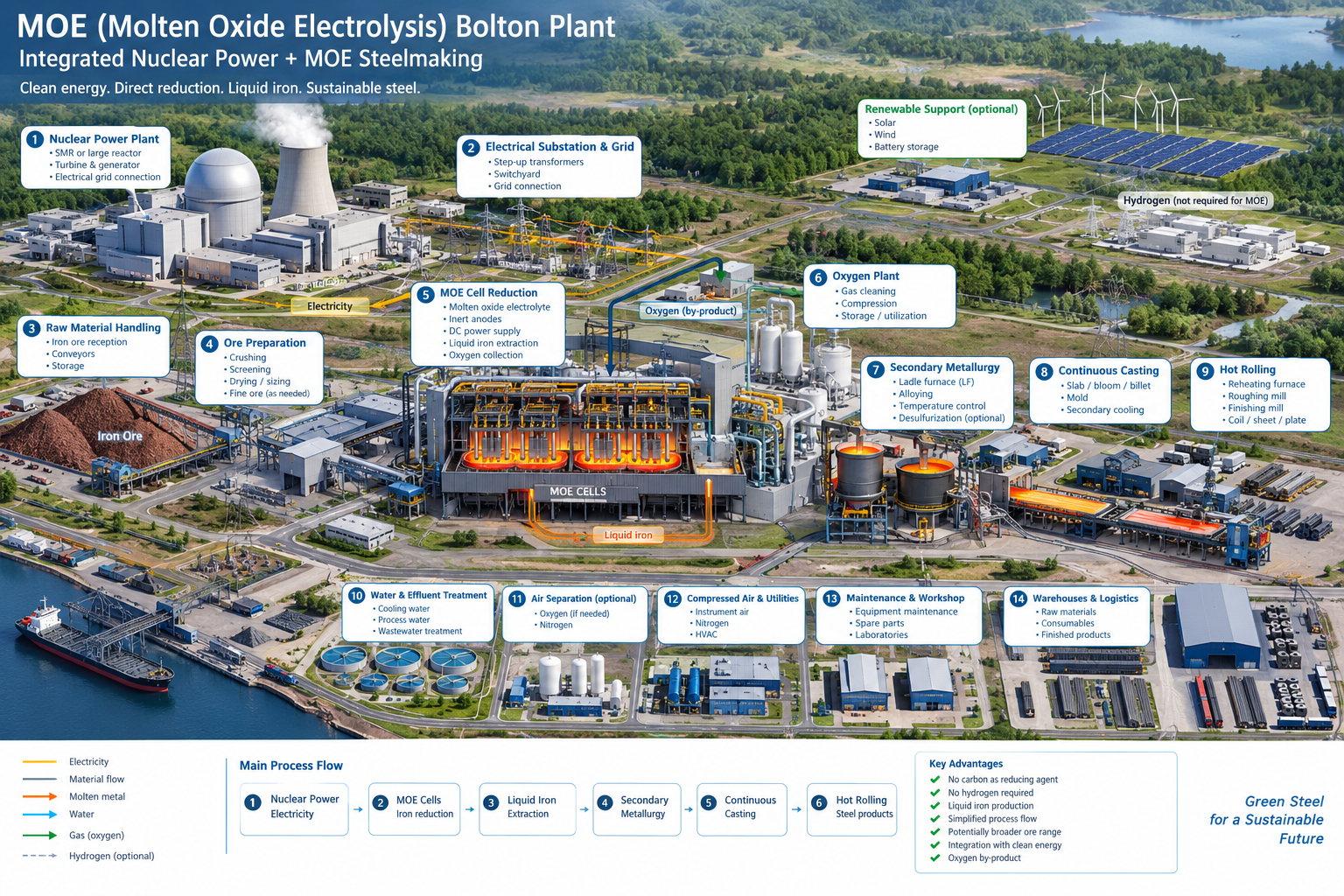
 Fig nº 1. Scheme of a future integrated Iron and Steel plant ; MOE Bolton Plant plus Nuclear Power. I.Ibarrondo and AI.
TECHNICAL REPORT
Molten Oxide Electrolysis (MOE) for Steel Production: Current Status, Prospects and Future of the Technology
October 2026
Ignacio Ibarrondo Martinez – Iturralde
Dr. Ing. Industrial
Formerly Catedrático E.U. (University Basque Country UPV/EHU)
https://www.researchgate.net/profile/Ignacio-Ibarrondo/stats
Summary:
Molten Oxide Electrolysis (MOE) is one of the most radical technologies currently being developed to decarbonize primary iron and steel production. Unlike the conventional blast furnace–LD/BOF route and the emerging H₂-DRI–EAF route, MOE attempts to reduce iron oxide using electricity directly, without using coal, coke, natural gas, or hydrogen as a reducing agent.
The ideal overall reaction can be represented in simplified form as:
Fe₂O₃(l) + 3e⁻ → 2Fe(l) + 3/2 O₂(g)
In reality, the electrochemical process takes place through different iron and oxygen species in a molten-oxide electrolyte. The desired result is liquid iron directly in the cell, with oxygen as a by-product, eliminating carbon from the reduction process. MIT demonstrated the concept experimentally (1, 2), and Boston Metal subsequently developed an industrial platform based on MOE (3, 4, 5, 6).
The situation in 2026 is particularly interesting. Boston Metal announced in March 2025 the commissioning of an industrial MOE cell with multiple inert anodes that produced steel at tonnage scale. However, the company subsequently modified its commercial priorities: in May 2026 it raised an additional $75 million and is concentrating its immediate MOE expansion on critical metals, while MOE Steel remains an application for the coming years (4, 5 ).
Therefore :
MOE is not yet a mature commercial technology capable of replacing H₂-DRI on a large scale, but it could become one of the most disruptive technologies in steelmaking in the late 2030s and during the 2040s.
In that case, it would become the third generation of steel production in History: the first being the blast furnace, the second being direct reduction—whether through conventional processes or hydrogen-based reduction—and, finally, the third generation: the Molten Oxide Electrolysis (MOE) Bolton Process.
Index :
Summary pp. 2
- What is Molten Oxide Electrolysis? pp. 5
2.- Physical and chemical fundamentals pp. 7
2.1. The basic electrochemical reaction
2.2 .- Thermodynamics Requirements
2.3 .-The importance of inert anode in the process
2.4.- Operating temperature
3.- Iron and steelmaking process pp . 13
4.-Energy consumption, production volume and process efficiency. pp.15
4.1. Theoretical and real energy requirements in the production process.
4.2. Specific electricity consumption: kWh per tonne of iron
4.3.- The Fundamental Difference MOE Compared with BF and H₂-DRI
4.4.- Potential advantages of MOE over BF and H2-DRI
5.- Industrial development and commercial status pp. 23
5.1.- The Decisive Breakthrough: Boston Metal
5.2.- The Real Situation of the Technology in 2026
5.3.- . News Item That Must Be Correctly Interpreted (2026).
6.-. Main technical challenges and engineering risks pp.27
6.1.- Anode durability and corrosion
6.2.- Electrolyte composition and control
6.3.- Refractory and thermal management
6.4.- Feedstock impurities and steel quality
6.5.- Electrical infrastructure and plant integration
6.6.-. MOE has an Enormous Electricity Requirement
6.6.1.- MOE + Renewables
6.6.2.- MOE + Nuclear Energy: A Particularly Interesting Combination
7.- Extraordinary Advantage: No Hydrogen Required pp.37
8.- MOE Challenges pp. 38
8.1.- MOE Production challenges in relation to BF and DR
8.2.- The Real Challenge: Electricity Cost
8.3.-. Second Major Challenge: Materials
8.4.- Third Challenge: Productivity
8.5.- Fourth Challenge: Electrolyte Control
8.6.-. Fifth Challenge: Impurities
9.- The Iron Produced by MOE pp.43
10.- MOE Compared with the Main Green-Steel Technologies pp.44
11.- Recent lower-temperature MOE research pp.46
12.- Technology Forecast pp.51
13.- Bibliographic references. pp.55
—————-
1. What is Molten Oxide Electrolysis?
MOE is a high-temperature electrometallurgical technology (3, 4, 5, 6, 7, 8, 9), emerging technology for producing primary iron directly from iron oxide by electrochemical reduction. It offers a potential alternative to conventional blast furnace–basic oxygen furnace (BF–BOF) steelmaking and to hydrogen-based direct reduction of iron (H₂-DRI), o conventional DR processes.
The technology most closely associated with industrial development of MOE for steel production is that of Boston Metal. Its process uses a high-temperature electrochemical cell in which iron oxides are dissolved in a molten oxide electrolyte. An electric current reduces iron ions to metallic iron at the cathode, while oxygen is released at an inert anode.
The principal attraction is that the oxygen removed from iron oxide can be produced as oxygen gas rather than as carbon dioxide, provided that the process avoids carbon-based reducing agents and the electricity and auxiliary heat are sufficiently low-carbon. Unlike H₂-DRI, MOE does not require hydrogen production, hydrogen storage or a hydrogen-recycle circuit.
And more, iron and steel production is one of the major industrial sources of greenhouse-gas emissions. Conventional integrated steelworks depend heavily on coal-derived coke, which acts both as a reducing agent and as a source of energy in the blast furnace. Carbon monoxide reduces iron oxides, and carbon dioxide is generated as part of the process.
MOE proposes a fundamentally different approach: using electricity to separate oxygen from iron oxide directly, producing liquid iron without the need for coke, carbon, conventional gas or H2 as a chemical reducing agent.
However, MOE should not yet be treated as a fully proven, commercially mature replacement for conventional ironmaking. Important challenges include inert-anode durability, cell materials, electrical efficiency, electrolyte chemistry, impurity control, continuous operation, scale-up and the cost of electricity.
In summary :
Fe₂O₃ + C → Fe + CO and CO₂
or hydrogen:
H₂– DRI
Fe₂O₃ + 3H₂ → 2Fe + 3H₂O
MOE uses electricity:
MOE
FeₓOᵧ + n e–→ Fe + O₂
2.1. The basic electrochemical reaction
The objective is to decompose iron oxide into metallic iron and oxygen using electricity (8,9 ).
For hematite, the overall idealized reaction is:
Fe2O3(l)→2 Fe(l)+3/2 O2(g)
This is a useful overall representation of the process. In an actual MOE cell, the iron oxide participates in the chemistry of the molten electrolyte, and the electrode reactions occur through dissolved ionic species.
The corresponding simplified cathodic (Pole -) reaction is:
2 Fe3+ + 6 e− → 2 Fe (l)
The anodic (Pole +) reaction can be written as:
3 O2− → 3/2 O2 (g) + 6 e−
The electrons travel through the external electrical circuit, while ionic species carry charge through the electrolyte. The net chemical reaction produces liquid iron and oxygen gas
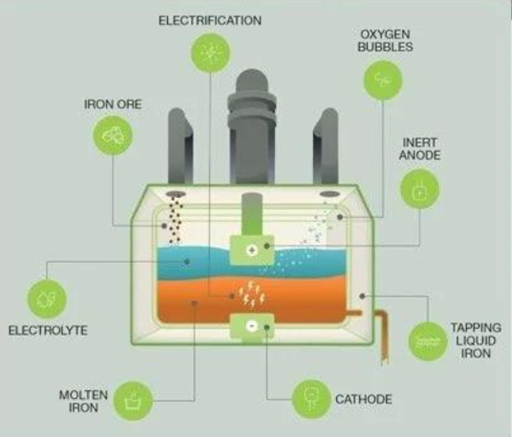
Bolton Metals Ref. nº 2
The cell contains:
- iron ore;
- molten-oxide electrolyte; A mixture of molten oxides that allows ionic species to be transported and maintains suitable operating conditions
- cathode; The reduction occurs at the cathode
- inert anodes; The anode must allow
O²⁻ → 1/2 O₂ + 2e⁻
- high-current DC electrical system;
- ore-feeding system;
- liquid-iron extraction system;
- oxygen extraction system.
The iron produced can leave the cell in the liquid state, which is one of the most important characteristics of MOE.
2.2 .- Thermodynamics Requirements
Iron oxide reduction is energetically demanding because the process reverses the formation of a stable metal oxide. The minimum reversible electrical work is related to the Gibbs free-energy change of the overall reaction:
ΔG = ΔH−TΔS
For a reversible electrochemical cell, the minimum decomposition voltage is:
Erev=ΔG/nF
where:
- ΔG is the Gibbs free-energy change per mole of reaction
- n is the number of electrons transferred per mole of reaction as written.
- F is the Faraday constant, approximately 96,485 C mol−1.
- Erev is the reversible decomposition voltage under the specified conditions.
- The real cell voltage must generally exceed the reversible voltage because of electrical resistance, electrode over potentials, concentration gradients, current distribution and other losses.
High operating temperatures can improve reaction kinetics and allow the product iron to remain liquid. However, they impose severe requirements on cell insulation, refractory materials, electrode stability and thermal management
2.3 .-The importance of inert anode in the process
The anode is one of the most important components of the Boston Metal approach.
If a carbon anode is used, oxygen from the oxide can react with the carbon, producing carbon monoxide or carbon dioxide. This undermines the objective of avoiding process-carbon emissions.
An inert or sufficiently durable oxygen-evolving anode must therefore withstand:
–Temperatures around or above the melting point of iron.
–Iron ore is introduced into a molten-oxide electrolyte, maintained at temperatures of approximately 1,600 °C or higher.
–Boston Metal currently describes its MOE Steel cell as operating at approximately 1,600 °C.
–Oxidizing conditions at the electrode–electrolyte interface.
–Corrosion by the molten oxide electrolyte.
–Thermal cycling and mechanical stresses.
–Long periods of operation at high current density.
Allanore, Yin and Sadoway (1) demonstrated a chromium-based alloy approach in which a protective, electrically conductive oxide layer contributes to anode stability. This authors established an important scientific basis for further development, although laboratory stability does not automatically guarantee industrial service life.
Boston Metal identifies its metallic inert anode technology as a critical part of its industrial platform and a technology it intends to supply alongside MOE licensing (13).
2.4.- Operating temperature
Boston Metal describes its MOE Steel process as operating at approximately 1,600 º C. This is above iron’s melting point, approximately 1,538 ºC, enabling liquid-iron production ( 2 ).
The temperature is a defining feature of the commercial concept. It facilitates rapid electrochemical processing and liquid-metal separation, but also makes the selection of anode materials, refractories, electrolyte chemistry and cell architecture exceptionally demanding.
Not every MOE research configuration operates at the same temperature. Lower-temperature experimental systems are in study.
3.- Iron and steelmaking process
The figure nº 1 describes the general sequences of industrial process (2, 4).
- Raw material handling.
- Iron ore preparation.
Iron-bearing feed is selected, characterized and prepared to meet the cell’s chemical and physical requirements. Ore impurities must be accounted for.
- MOE Cell Reduction ( see Thermodynamics Requirements )
- Molten oxide electrolysis cell.
The feed dissolves or reacts in a molten oxide electrolyte. A high-current DC power supply drives the electrochemical reactions.
- Electrochemical separation
Iron ions are reduced at the cathode, while oxide ions release oxygen at the anode. The liquid metal collects within the cell.
- Secondary Metallurgy Ladle furnace; Alloying and Temperature control .
- Continous casting and / or Strip Casting Technology (11)
- Hot rolling
- Cold rolling
Other Elements
- Nuclear Power plant : SMR or large reactor
This is of crucial importance, as electrical energy is the foundation of this process, and its price and availability will determine whether or not it is implemented on an industrial scale (12).
Electrical Substation
Oxygen plant
Water & Effluents Treatment
Maintenance, Logistic etc….
As I have previously noted, the principal advantage of this arrangement is the potential integration of iron extraction and production of liquid metal in one electrochemical unit, avoiding the separate coke-making, sintering or pelletizing, blast-furnace reduction and basic oxygen furnace stages associated with the conventional integrated route, or shaft furnace and hydrogen production in H2 – DR as new process.
4. Energy consumption, production volume and process efficiency.
4.1. Theoretical and real energy requirements in the production process.
Production volume in t/h at an industrial scale, the electricity consumption of MOE (and its price (12) ) is the decisive factors in its industrial competitiveness. It depends on the thermodynamic requirements, cell voltage, current efficiency, thermal losses and the energy needed by auxiliary equipment.
Faraday’s law relates the amount of iron produced to the electrical charge passed through the cell:
mFe=MFe. I.t.ηF / 3F
where MFe is the molar mass of iron, I is current intensity , t is time, and ηF is the Faradaic current efficiency. Three electrons are required per iron atom for the overall Fe(III) – to – Fe reaction.
An important distinction is that the minimum reversible electrical work is not the same as the practical electricity consumption in a high-temperature MOE plant.
The essential distinction is between the theoretical electricity requirement, an engineering estimate for a future industrial plant, and the actual measured consumption of a commercial-scale MOE installation.
These are not interchangeable. Boston Metal’s technology has been developed through pilot-scale and scale-up activities, but a definitive, independently verified electricity-consumption figure in kWh per tonne of iron for a fully commercial MOE steel plant should not be assumed without published operating data.
For example, at approximately 1,600º C, a large amount of energy is also required to heat the feed, maintain the molten bath and compensate for heat losses. Electrical resistance can provide part of this heat internally, but it does not eliminate the need for an overall energy balance.
|
Parameter |
Electricity consumption |
Status |
|
Theoretical minimum for high-temperature MOE |
Approxim 1,800 kWh/t Fe |
Thermodynamic/engineering estimate under idealised conditions |
|
Published MOE steelmaking estimate |
13 GJ/t steel = 3,611 kWh/t steel |
Process-level estimate cited in a Columbia University steel-industry presentation |
|
Experimental iron electrolysis in a separate molten-oxide system |
2,600 kWh/t Fe reported for a process close to the thermodynamic minimum |
Research literature; not Boston Metal’s measured consumption |
|
Boston Metal industrial cell |
Not publicly quantified in the cited company announcement |
Industrial cell commissioned; tonnage-scale production reported, but no specific kWh/t figure supplied |
Important: the value of 3,611 kWh/t is a published process-level estimate, not a verified operating measurement from Boston Metal. Similarly, the 2,600 kWh/t figure should not be attributed directly to Boston Metal.
4.3.- The Fundamental Difference MOE Compared with BF and H₂-DRI
This comparison is essential for understanding the future of MOE (48,9).
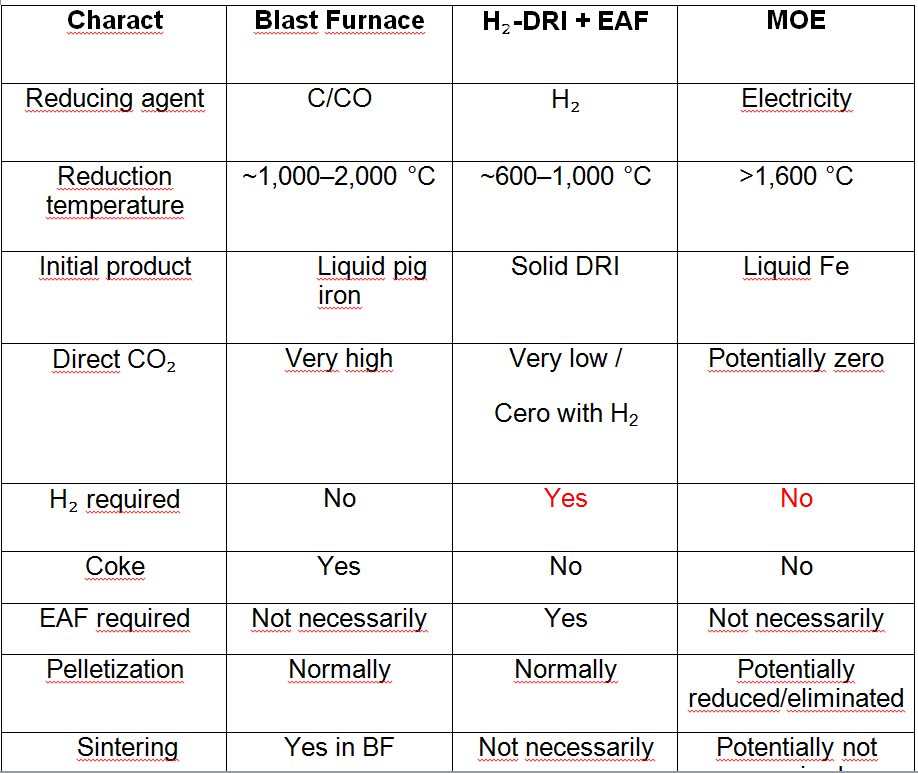
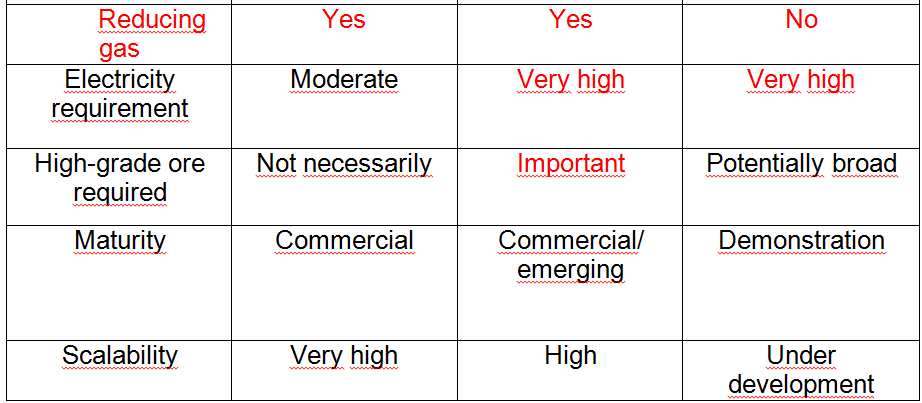
The principal conceptual advantage of MOE is that it electrifies the metallurgical reaction directly, whereas H₂-DRI indirectly electrifies iron production through hydrogen generation
4.4.- Potential advantages of MOE over BF and H2-DRI
Global steel production continues to depend primarily on coal-based routes. A scientific review published in npj Materials Sustainability (9) identifies iron electrolysis, including molten oxide electrolysis, among the routes with potential to produce low- or near-zero-emission iron and steel.
The advantage of MOE is that it attempts to eliminate several processes simultaneously.
Conventional Route (BF).
Ore → sinter/pellet → coke → blast furnace → pig iron → BOF → secondary metallurgy → steel
H₂-DRI Route:
Ore → pellet → H₂ → DRI → EAF → steel
Other routes
MOE Route:
Ore → MOE → liquid iron → secondary metallurgy → steel
Boston Metal states:
– That its process could eliminate in BF stages such as:
- coke making;
- sintering;
- pelletization;
- blast-furnace reduction;
- BOF conversion.
-Advantages over conventional DR, and H2 – DRI
It avoids the hydrogen-production stage and associated electrolyser capital investment.
It does not require hydrogen storage, compression or a reducing-gas recycle loop.
It can potentially produce liquid iron directly, avoiding the need to melt DRI in a separate furnace.
It offers a potential route to using a broader range of iron-bearing feedstocks, subject to impurity management and cell-specific feed requirements.
Modular cells may allow capacity to be increased by adding cells or electrode assemblies.
These are potential advantages, not guarantees of lower total cost.
In particular, MOE still requires substantial electricity, and the direct use of liquid iron does not eliminate the need for appropriate steel refining and casting equipment.
This simplification is probably the most important industrial argument in favor of MOE.
———–
Other advantage Compared with H₂-DRI: The Ore
One of the problems associated with H₂-DRI is the need for suitable raw materials.
The industry requires:
- high-quality pellets;
- high Fe content;
- low gangue levels;
- good reducibility;
- low impurity content.
SUSTAIN, for example, points to problems associated with the availability of suitable-quality ore and with the supply and price of green hydrogen
Boston Metal identifies one potential advantage of MOE precisely in this area: its process is intended to be compatible with a much broader range of ores.
If this claim is demonstrated at commercial scale, it could become an enormous strategic advantage
5.- Industrial development and commercial status .
5.1.- The Decisive Breakthrough: Boston Metal
Boston Metal originated from research developed at MIT.
The company has developed MOE technology toward cells considerably larger than the original laboratory experiments. MIT explains that the technology evolved from experiments producing programs to installations capable of producing hundreds of kilograms and subsequently tonnes.
2013 — Scientific publication: Allanore, Yin and Sadoway published their research on chromium-based anodes in Nature (1).
2014 — Semi-industrial development: Boston Metal’s company history records commissioning of a semi-industrial MOE cell (10).
March 2025 — Boston Metal announced a very important milestone: An industrial MOE cell with multiple inert anodes began producing steel at tonnage scale (4, 5, 6).
This is very important because the question changes from: “Is it possible to produce iron by MOE?” to “Can we reliably and economically produce millions of tonnes per year?”
This is the core of the Bolton process’s viability at an industrial level.
2026 — Continued commercial development: The company reports further investment to scale its Critical Metals business and describes MOE Steel as a technology intended for subsequent deployment (10).
5.2.- The Real Situation of the Technology in 2026
Here we must be very careful.
I do not consider it correct to state that MOE Steel is already commercially available on a large scale.
Because: several questions remain essential for commercial assessment.
Can the cell operate reliably over prolonged campaigns?
What are the actual electricity consumption and current efficiency at sustained industrial production rates?
How frequently must anodes and refractory components be replaced?
Can the cell handle variable ore compositions while consistently producing iron that meets downstream requirements?
What are the maintenance costs, production availability and total capital costs per tonne of annual capacity?
Can multiple cells operate reliably as part of an integrated steelworks?
Public announcements of successful cell commissioning do not, by themselves, answer all these questions.
Boston Metal’s stated business model is to license its MOE platform to steel producers and supply metallic inert anodes, rather than to become a conventional steel producer itself. Its commercial strategy and future demonstration plans should be distinguished from an established fleet of commercial-scale MOE steel plants (10).
The OECD placed molten oxide electrolysis at a still relatively low technology readiness level, compared with mature steelmaking technologies. The same assessment indicates that MOE has significant emissions-reduction potential but still needs to overcome important industrialization barriers.
Therefore:
2026
Laboratory → Pilot → Industrial Demonstration
but not yet:
Demonstration → Mass Steel Production
5.3.- . News Item That Must Be Correctly Interpreted (2026).
There is a particularly important aspect.
In May 2026 Boston Metal announced an additional investment of $75 million, bringing the total capital raised to more than $500 million.
However, the company explained that the immediate objective of this financing was to accelerate the commercial deployment of MOE Critical Metals, particularly:
- niobium;
- tantalum;
- vanadium;
- nickel;
Including production from low-grade feedstocks and industrial waste.
This means that Boston Metal is initially using the potential of MOE where the economics may be more favorable.
It means that the company is using a staged commercialization strategy:
Stage 1
MOE → Critical metals
Stage 2
MOE → Ferroalloys / metallurgical applications
Stage 3
MOE → Iron
Stage 4
MOE → Mass steel production
This appears to be a very reasonable business strategy.
6.-. Main technical challenges and engineering risks.
6.1.- Anode durability and corrosion
The inert anode is arguably the most critical materials challenge. It must conduct electricity and evolve oxygen while resisting dissolution, oxidation and structural degradation in a corrosive molten oxide environment.
Anode degradation can lead to:
Increased operating costs and unplanned shutdowns.
Contamination of the iron or electrolyte by anode constituents.
Changes in cell voltage and current distribution.
Difficulties in maintaining consistent product quality.
Long-duration testing, corrosion analysis and reliable replacement procedures are therefore essential to the commercial development of MOE. The 2013 Nature study established a promising materials approach, but industrial service life must be assessed under representative operating conditions .
Scientific research conducted at MIT makes it possible to identify relevant materials.
Chromium-based alloys: research published in Nature demonstrated that chromium alloys, in molten oxide baths (such as MgO-CaO-SiO2-Al2O3), can develop a protective layer of chromium and aluminum oxides with a corundum-type structure (Cr2-ₓ AlₓO3) (1,19) a form of «dynamic self protection» which limits the consumption of the anode.
Iridium (Ir): used in laboratory experiments due to its resistance under specific conditions. It has been evaluated as an initial noble anode in molten oxide baths (such as MgO-CaO-SiO2-Al2O3) operating at temperatures above 1,538 °C. Its stability depends largely on the basicity of the electrolyte (showing a lower wear rate in acidic slags with high silica content compared to basic slags); however, its high cost limits its large-scale commercial viability (20, 21).
The most solid reference point for explaining Boston Metal’s industrial concept is a proprietary, inert metal alloy.
6.2.- Electrolyte composition and control
The electrolyte must, first dissolve or accommodate iron oxide, second conduct ionic current and remain stable at operating temperature. Its composition also affects viscosity, electrical conductivity, oxygen-ion transport and corrosion of the cell lining.
A viable industrial electrolyte must balance competing requirements:
High electrical conductivity to reduce resistive losses.
Suitable solubility and transport of iron-bearing species.
Chemical compatibility with the electrodes and refractory lining.
Low contamination of the iron product.
Stable operation as ore and slag composition change.
Experimental studies show that the multiple oxidation states of iron and the chemistry of the molten oxide phase complicate the reduction process.
So the process as a whole is extraordinarily complex.
The exact industrial electrolyte formulation used in Boston Metal’s commercial-scale MOE steel cells has not been fully disclosed publicly. Therefore, the following table describes the general chemistry of molten oxide electrolysis rather than claiming a verified proprietary recipe.
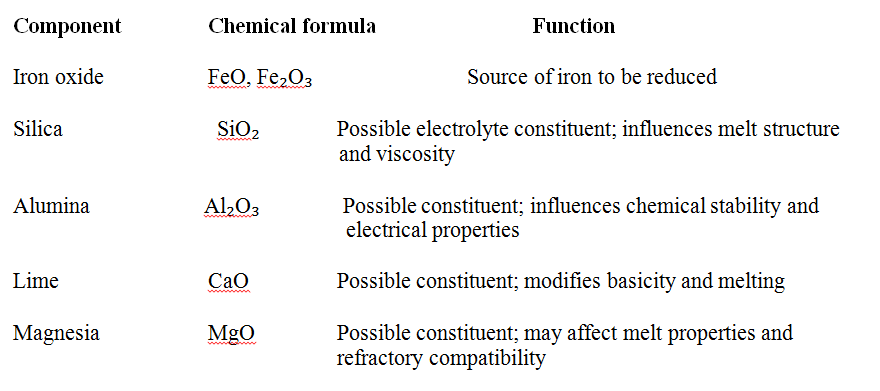
Boston Metal’s published patent literature describes supporting electrolytes containing combinations of metal oxides, including the following candidates (8, 22, 10, 23) :
Cerium oxide — CeO2
Lanthanum oxide — La2O3
Strontium oxide — SrO
Barium oxide — BaO
Beryllium oxide — BeO
Magnesium oxide — MgO
Calcium oxide — CaO
These are patent-disclosed candidate constituents, not a confirmed recipe for the current MOE Steel cell. The patent describes alternative compositions, rather than requiring all these oxides in one electrolyte.
6.3.- Refractory and thermal management
The cell operates at extreme temperature, with molten metal and an aggressive oxide electrolyte in contact with its internal materials. Refractory selection must account for chemical attack, thermal shock, electrical properties and possible contamination.
Thermal management is equally important. Excessive heat loss increases electricity consumption, while insufficient heat input can cause freezing or solidification of the bath. A commercial design must maintain the necessary temperature distribution without creating damaging hot spots.
In Resume Thermal Balance and Joule Heating
The MOE process is self-heating via Joule heating. As massive electrical currents pass from the inert anodes through the liquid electrolyte to the cathode, the inherent electrical resistance of the fluid generates the thermal energy needed to maintain 1,600°C (24).
If the cell receives too much power, the protective freeze lining can melt away, exposing the brick to catastrophic corrosion and causing containment failures. Conversely, if the cell cools too much, the entire block of electrolyte can solidify, resulting in a catastrophic «cell freeze» that permanently ruins the module (25).
Direct Comparison: MOE vs. Traditional Refractory Systems
| Parameter |
Traditional Steel Refractories (Blast Furnace/EAF) |
MOE Cell Refractories |
| Primary Containment | Sacrificial refractory bricks (Mag-Carbon, Alumina) | Stable Freeze Lining (solidified electrolyte) |
| Thermal Strategy | Minimize heat loss entirely to conserve fossil energy | Controlled heat flux to maintain the frozen boundary layer |
| Heating Source | Combustion of coke/coal or plasma arcs | Internal Joule heating from bulk electrical current |
| Risk Profile | Gradual brick thinning and chemical erosion | Sudden shell leaks if the freeze lining melt |
6.4.- Feedstock impurities and steel quality
Boston Metal presents MOE as a technology with the potential to use a broad range of iron ores. However, the claim that all ore grades can be used should be interpreted as a development objective rather than as proof that every ore is economically suitable without preparation.
Gangue minerals and other impurities may accumulate in the electrolyte, alter its chemistry or affect the final metal. The industrial process will need appropriate feed characterization, electrolyte management and downstream refining.
6.5.- Electrical infrastructure and plant integration
MOE requires a reliable high-current DC supply, robust electrical connections and effective control systems. The plant must also integrate ore handling, liquid-iron tapping, oxygen management, maintenance access and downstream steelmaking (see Fig nº1).
Where electricity is supplied by a nuclear plant, renewable generation or a combination of sources, the design must account for availability, load-following requirements, backup supply and the cost of connecting the electrochemical plant to the electricity system.
6.6.-. MOE has an Enormous Electricity Requirement
Here we encounter its main disadvantage compared with H₂-DRI.
MOE replaces chemical energy with electrical energy.
The electricity required is not only that associated with the electrochemical reaction. The following must also be considered:
- bath heating;
- electrical losses;
- thermal losses;
- melting;
- temperature maintenance;
- ore feeding;
- metal extraction;
- auxiliaries;
- transformers;
- rectifiers.
Therefore, the availability of abundant and inexpensive electricity will be decisive (Nuclear Power) (12).
MIT has indicated that MOE requires an almost carbon-free electricity source in order to maximize its environmental advantages.
As indication (26):
|
Parameter |
Electricity consumption |
Status |
| Theoretical minimum for high-temperature MOE | Approximately 1,800 kWh/t Fe | Thermodynamic/engineering estimate under idealised conditions |
|
Published MOE steelmaking estimate |
13 GJ/t steel = 3,611 kWh/t steel |
Process-level estimate cited in a Columbia University steel-industry presentation |
|
Experimental iron electrolysis in a separate molten-oxide system |
2,600 kWh/t Fe reported for a process close to the thermodynamic minimum |
Research literature; not Boston Metal’s measured consumption |
|
Boston Metal industrial cell |
Not publicly quantified in the cited company announcement |
Industrial cell commissioned; tonnage-scale production reported, but no specific kWh/t figure supplied |
Important: the value of 3,611 kWh/t is a published process-level estimate, not a verified operating measurement from Boston Metal. Similarly, the 2,600 kWh/t figure should not be attributed directly to Boston Metal.
6.6.1.- MOE + Renewables
A future configuration could be:
Wind + Solar + Hydropower…….. Electrical grid / storage
Substation …. Rectifier…. MOE ….. Liquid iron ……
Secondary Metallurgy…… Continuous casting …… Rolling
6.6.2.- MOE + Nuclear Energy: A Particularly Interesting Combination (10)
For the study being developed on nuclear energy + hydrogen + steelmaking, MOE introduces an additional and very interesting possibility:
Nuclear reactor ….. electricity ….. MOE …. liquid iron Secondary Metallurgy ….. Continuous casting ….Rolling
In this case, hydrogen production is not required.
A nuclear reactor could provide:
- electricity 24h / 7days;
- firm power;
- high availability;
- grid stability;
- reduced dependence on electrical storage.
This could be particularly attractive for MOE because the cell operates at extremely high temperature and requires a continuous and stable electrical supply.
Conceptually:
H₂-DRI
Nuclear → electricity → H₂ → DRI……..
whereas:
MOE
Nuclear → electricity → MOE → liquid Fe
This makes MOE a technology that deserves to be included in any serious study of nuclear energy + green steel (12).
7.- Extraordinary Advantage: No Hydrogen Required
This point is extremely important for the future.
H₂-DRI requires:
Renewable electricity → electrolyzer → H₂ → compression → storage → DRI reactor → EAF
MOE requires:
Electricity → MOE → liquid iron
Therefore, MOE could avoid:
- electrolyzers;
- H₂ compressors;
- H₂ storage;
- H₂ pipelines;
- reducing-gas recirculation;
- H₂/H₂O control;
- reducing-gas heating.
This could simplify the plant enormously.
8.- MOE Challenges
8.1.- MOE Production challenges in relation to BF and DR
Here we find one of the differences:
Reference production scales
Large blast furnace
Hot metal, depending on furnace size and operating conditions; not a universal range or a claim for every furnace : 2,000–12,000 t/day
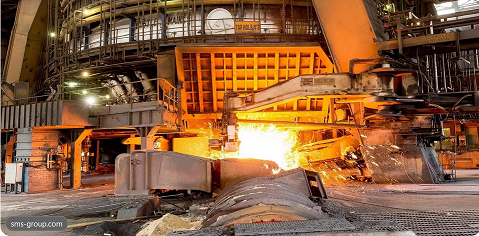
Large DRI shaft-furnace module
DRI product; actual capacity varies with technology, module design, feed and operating conditions: 1–2.5 Mt/year
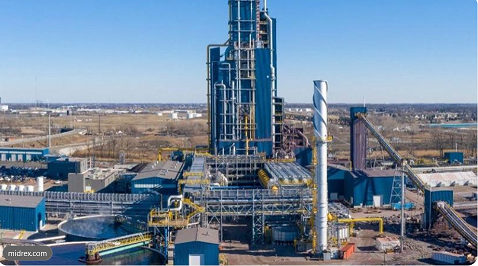
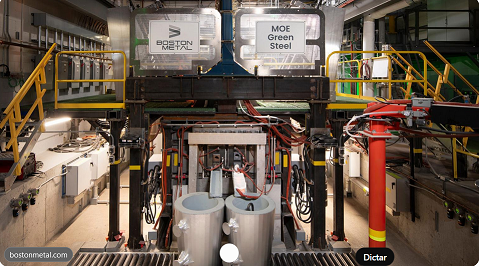
Boston Metal MOE: Not directly comparable
Tonnage-scale demonstration
Industrial-cell milestone announced in 2025. A verified commercial annual capacity is not publicly established in the cited material.
8.2.- The Real Challenge: Electricity Cost
See: 4.2 , 6.6 and 6.6.2
8.3.-. Second Major Challenge: Materials
The MOE cell requires materials capable of surviving for thousands of hours at:
T > 1,600 °C
in a highly oxidizing environment.
Critical components include:
- anodes;
- cathodes;
- refractories;
- cell walls;
- feeding systems;
- liquid-iron extraction systems;
- electrical connections.
The development of the inert anode was precisely one of the major advances in MIT/Boston Metal research.
However, for a plant producing millions of tonnes per year, it is not enough for the anode simply to function.
It must function for:
10,000–50,000 hours, ideally with extremely low degradation.
8.4.- Third Challenge: Productivity
Steel production requires enormous production rates.
Therefore, a technology that produces tonnes of iron in a laboratory may be scientifically excellent, but it needs to increase its productivity by several orders of magnitude to compete with an integrated steel complex.
This is one of the points that must be closely monitored over the next 5–10 years.
8.5.- Fourth Challenge: Electrolyte Control
See 6.2
The electrolyte must dissolve or accommodate iron oxide, conduct ionic current and remain stable at operating temperature. Its composition also affects viscosity, electrical conductivity, oxygen-ion transport and corrosion of the cell lining.
A viable industrial electrolyte must balance competing requirements :
- high ionic conductivity;
- chemical stability;
- low volatility;
- good iron-oxide solubility;
- suitable viscosity;
- compatibility with the anode and cathode;
- stability against impurities in the ore.
Scientific literature identifies electrolyte design precisely as one of the central elements in making MOE viable.
Therefore, the process is not simply:
“Put molten ore in a bath and pass electricity through it.”
It is a complex problem involving:
electrochemistry + thermodynamics + mass transfer + heat transfer + materials science + electrical engineering.
8.6.-. Fifth Challenge: Impurities
A critical question will be:
What happens to SiO₂, Al₂O₃, MgO, CaO, P, S, Ti and other elements?
A commercial technology must control:
Fe₂O₃ + SiO₂ + Al₂O₃ + CaO + MgO + …
The possibility of feeding ores of different qualities could become a major advantage, but it also increases electrolyte complexity and process-control requirements.
9.- The Iron Produced by MOE
A potentially very important advantage is purity.
MIT indicates that MOE can produce particularly clean iron, without carbon originating from the reduction process and without sulfur associated with coke.
This opens possibilities for:
- electrical steels;
- automotive steels;
- thin sheet;
- special steels;
- stainless steels;
- high-value alloys.
However, the following will need to be demonstrated industrially:
- composition;
- inclusions;
- nitrogen;
- oxygen;
- carbon control;
- metallurgical quality;
- homogeneity.
10.- MOE Compared with the Main Green-Steel Technologies.
Approximate maturity ranking in 2026
| Technology |
Maturity |
2030 Outlook |
2040 Outlook |
|
EAF + scrap |
***** |
Very high |
Very high |
|
H₂-DRI + EAF |
**** |
Very high |
Very high |
|
Natural-gas DRI + EAF |
***** |
High |
In transition |
|
BF + CCS |
**** |
Moderate |
Uncertain |
|
Alkaline iron electrolysis |
*** |
Advanced research |
Possible |
|
MOE |
** |
Demonstration |
Very promising |
|
Hydrogen plasma |
** |
Experimental |
Potential |
|
Aqueous electrowinning |
*** |
Research/pilot |
Potential |
The technology readiness of Molten Oxide Electrolysis (MOE) for primary steelmaking remains substantially below that of commercially established ironmaking and steelmaking routes. The OECD’s 2024 assessment classified MOE at TRL 2 in its technology-maturity comparison, reflecting its early stage of development at the time of assessment (27).
More recent scientific reviews continue to identify significant engineering challenges, particularly the durability of inert anodes under highly corrosive, high-temperature operating conditions, electrolyte optimization, electrode–electrolyte interfacial kinetics, mass-transfer limitations and the reliable scale-up of electrolysis cells. Although industrial-cell commissioning and tonnage-scale iron production have been reported by Boston Metal, these milestones should be distinguished from sustained, commercially competitive, large-scale steel production (9, 28, 29, 30).
11.- Recent lower-temperature MOE research
A significant recent developmentis research into lower-temperature MOE, intended to reduce thermal requirements and potentially improve energy efficiency and materials durability. In particular, a peer-reviewed study published in Scientific Reports on 7 July 2026 demonstrated iron production at 1173 K (900°C) using a boron oxide–sodium oxide (B2O3−−Na2O) molten oxide electrolyte (17).
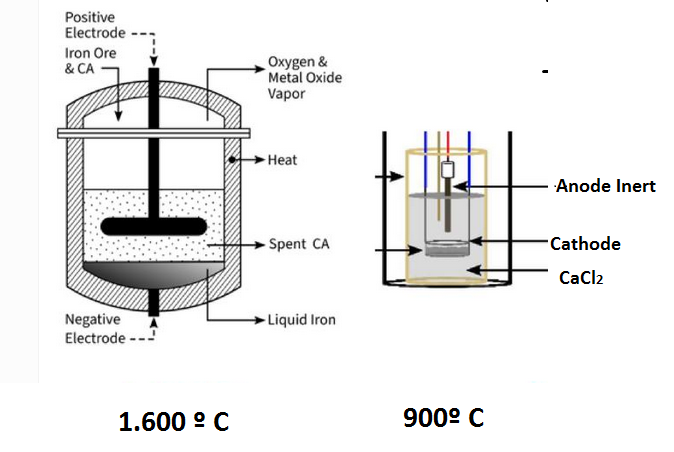
11.1.- Direct iron production at 900°C (2026)
Kim, Kang and Yi (17) investigated the electrolysis of iron oxides and iron ores using a B2O3−Na2O molten oxide electrolyte at 900 º C, 1173 K.
The principal findings were:
- Operating temperature: 900°C, substantially below conventional liquid-iron MOE temperatures.
- Cell voltage: 1.6 V in the reported experiments.
- Feedstocks: hematite (Fe2 O3), goethite ( FeO (OH)) and magnetite( Fe3O4)were investigated.
- Current efficiency: approximately 65–79%, depending on the iron oxide and atmosphere.
- Atmosphere: argon generally improved current efficiency by limiting re-oxidation of the iron produced.
The study demonstrates that iron can be obtained electrochemically from several iron-bearing feedstocks at a temperature much lower than that used in conventional MOE.
A crucial qualification is that this is a laboratory-scale scientific demonstration, not proof of a commercially scalable process. At 900°C, iron is solid rather than liquid, so the product collection and downstream processing differ from conventional MOE.
Comparison of conventional and lower-temperature MOE
|
Parameter |
Conventional MOE |
Lower-temperature MOE research |
|
Typical temperature |
Around 1,600°C or above |
900°C in the 2025–2026 studies |
|
Electrolyte |
High-temperature molten oxide |
B2O3 −Na2O oxide melt |
|
Iron product |
Liquid iron in conventional designs |
Solid iron at 900°C |
|
Main objective |
Continuous primary iron production |
Reduce temperature and investigate direct iron recovery |
|
Development status |
Industrial development and scale-up |
Laboratory research |
|
Principal challenges |
Anode durability, high temperature, cell scale-up |
Current efficiency, electrolyte stability, iron re-oxidation and scale-up |
11.2.- Recovery of iron and zinc from steelmaking dust (2025)
A second important study investigated low-temperature electrolysis of mixtures of hematite (Fe2O3) and zinc oxide (ZnO) at 1173 K (900°C).
The researchers used the same general (B2O3− Na2O) electrolyte system and demonstrated that (31):
- At 1.1 Volts, iron oxide could be reduced selectively to metallic iron without reducing zinc oxide.
- At 1.6 Volts, iron and zinc could be reduced together to form an iron–zinc alloy.
- Subsequent vacuum distillation enabled high-purity zinc recovery from the alloy.
This research is particularly relevant to recycling electric-arc-furnace (EAF) dust, potentially recovering valuable metals while reducing reliance on conventional, carbon-intensive recovery routes.
11.3.- The main research priorities are:
-.Electrolyte stability: determining whether the borate-based electrolyte can operate continuously without significant composition changes or degradation.
-.Current efficiency: reducing parasitic reactions and preventing the re-oxidation of metallic iron.
-.Electrode materials: identifying durable anodes and cathodes suitable for prolonged operation.
-.Energy consumption: measuring total electricity demand, including heating and auxiliary systems, rather than considering cell voltage alone.
-.Industrial scale-up: demonstrating sustained production rates, continuous product removal and reliable operation beyond laboratory experiments.
Resume
Research published in 2025 and 2026 has established an important scientific advance: iron oxides can be reduced to metallic iron by molten oxide electrolysis at approximately 900°C, considerably below conventional MOE operating temperatures.
The most significant result is the 2026 demonstration using a B2O−Na2O electrolyte. However, lower-temperature MOE remains at the research stage, and further work is required to demonstrate high efficiency, durable electrodes, continuous production and industrial economics.
For future steelmaking, this approach merits investigation as a potential alternative to conventional high-temperature MOE. It should not yet be considered a commercially proven replacement for either conventional MOE or hydrogen-based direct reduction.
12-. Technology Forecast
The central scenario would be:
2026–2030
Investigation and Aplications
- industrial cells;
- critical metals;
- anode validation;
- first iron demonstrations;
- electrolyte development;
- increased current density.
2030–2035
First Demonstration Iron Plants
Possibly:
50,000–250,000 t/year
2035–2040
First Commercial Plants
Possibly:
0.2–1.0 Mt/year
if the technical problems are solved.
2040–2050
True competition could begin:
MOE vs H₂-DRI.
12.1.- The Factor That Could Change Everything: Nuclear Electricity (12).
For me, this is one of the most interesting lines :
-Conventional Steel Plant
Nuclear/renewables → Electricity → Electrolyzer → H₂ → DRI → EAF
-MOE
Nuclear/renewables → Electricity → MOE → Liquid Iron → Steel
This eliminates a huge amount of intermediate infrastructure.
The combination:
SMR nuclear + MOE
Could be particularly interesting in regions where electricity is more valuable than hydrogen production.
12.2.- My assessment: very high potential / high technological risk
MOE possesses several advantages that no other green-steel technology combines simultaneously:
-Elimination of Carbon
It does not require coke or carbon as a reducing agent.
– No Hydrogen Required
It eliminates the entire hydrogen production and logistics chain.
– Liquid Iron Production
It potentially allows direct integration with steelmaking.
– Process Simplification
It can eliminate several stages of conventional steelmaking.
– Possibility of Using a Wider Range of Ores
Potentially an enormous strategic advantage.
– Modularity
It may allow progressive expansion.
– Oxygen as a By-product
The oxygen produced may have industrial value.
12.3.- But There Is One Absolutely Decisive Condition
MOE will not be a revolutionary technology simply because it does not emit CO₂.
It must simultaneously demonstrate:
Cost + Productivity + Durability + Efficiency + Availability
If any one of these fails, it will be difficult for MOE to displace H₂-DRI.
The 2025 article on MOE included in Treatise on Process Metallurgy (30) summarizes precisely that, although the properties of molten oxides offer unique advantages and scale-up efforts are underway, the transition from concept to tonnage production remains difficult.
12.4.- MOE should be considered a strategic third-generation technology for green steel.
In 2026, H₂-DRI is much closer to large-scale industrial deployment. However, MOE has a potentially disruptive characteristic: it can simultaneously eliminate carbon and hydrogen from the primary ironmaking stage, using electricity to transform oxide directly into liquid iron.
The 2025 Boston Metal milestone (13)—a multi-inert-anode industrial MOE cell producing steel at tonnage scale—demonstrates that the concept has advanced significantly beyond the laboratory.
However, Boston Metal’s commercial priority in 2026 has shifted toward critical metals, showing that the path toward large-scale steel production still requires further maturation.
And so, MOE will not replace H₂-DRI during the next few years, but it could become one of the principal competitors to H₂-DRI after 2035 and, if it successfully solves the problems associated with anodes, electrolytes, productivity and electricity supply, it could play a very important role in the future of steelmaking.
—————————————
Bibliographic References :
1.- A new anode material for oxygen evolution in molten oxide electrolysis
Antoine Allanore , Lan Yin & Donald R. Sadoway
Nature 497, 2013, pp. 353–356 , Letter Published: 08 May 2013
https://doi.org/10.1038/nature12134
————–
2.- Making Steel with Electricity
Zach Winn
MIT news may 22, 2024
https://tlo.mit.edu/news/making-steel-electricity?utm_source=chatgpt.com
https://mrl.mit.edu/index.php/articles/making_steel_with_electricity
———————
3 – Bolton Metals Products Co, inc.
Wendy Gavlock, General Manager
https://boltonmetalproducts.com/pages/contact-us
Email: wgavlock@boltonmetalproducts.com
——————
4.- Boston Metal Celebrates Historic Commissioning Run of MOE Green Steel Cell
Published: March 12, 2025
——————–
5 .- Boston Metal ($330M to produce green steel using molten oxide electrolysis technology powered by renewable energy), very interesting.
Technology Wealth, Research for Sustainability
Startups / March 21, 2023
https://technologywealth.com/startups/boston-metal/
————————–
6.- Molten Oxide Electrolysis: The Next Breakthrough in Carbon-Free Steel
Steel technology 31.12.2025
https://www.steel-technology.com/articles/molten-oxide-electrolysis-the-next-breakthrough.
https://www.steel-technology.com/articles/future-of-steel-trends-technology-sustainability
——————-
7.- Electrolysis for ironmaking-Global Energy Monitor –GEM .wiki
9.06.2026
https://www.gem.wiki/Electrolysis_for_ironmaking
————————
8.- Electrolysis of iron in a molten oxide electrolyte
Wiencke, J., Lavelaine, H., Panteix, PJ. Carine Petitjean &
J Appl Electrochem 48, 115–126 (2018).
https://link.springer.com/article/10.1007/s10800-017-1143-5
——————-
9.-. Chemical and electrochemical pathways to low-carbon iron and steel.
Rippy, K., Bell, R.T. & Leick, N.
Npj. Mater. Sustain. 2, 33 (2024).
https://www.nature.com/articles/s44296-024-00036-6
https://doi.org/10.1038/s44296-024-00036-6
————————-
10.- Boston metals
Advancing steel decarbonization. Company technical overview, describing the process, operating temperature, modular cells and development pathway. Official website
About Boston Metals 2024 -25 -26
https://www.bostonmetal.com/about/?utm_source=chatgpt.com
————
11.- Review of the Strip Casting Technology by Twin Roll Method.
Ignacio Ibarrondo
30.10.2008 Pag. 1- 355
https://www.ironandsteelmaking.com
https://www.researchgate.net/profile/Ignacio-Ibarrondo/research
————
12.- The need to use nuclear energy for the energy transition to Hydrogen in Iron and Steel Industry (Reviewed 05).
Ignacio Ibarrondo
03.11.2021
https://www.ironandsteelmaking.com
https://www.researchgate.net/profile/Ignacio-Ibarrondo/research
————–
- Boston Metal (2025).
Boston Metal Commissions Industrial-Scale Cell in Crucial Green Steel Milestone. 12 March 2025.
Company announcement on commissioning the multi-inert-anode cell and producing tonnage-scale iron..
https://www.globenewswire.com/NewsRoom/AttachmentNg/bd55dd4d-f47a-4c51-90a2-1a450db0070e
——————
14.. Molten Oxide Electrolysis for Iron Production: Identification of Key Process Parameters for Large-scale Development.
Allanore, A., Lavelaine, H., Valentin, G., Birat, J.-P., Delcroix, P. & Lapicque, F
Department of Materials Science & Engineering, 77 Massachusetts Avenue, Cambridge, 02139, MA, USA.
Energy Technology 2011: Carbon Dioxide and Other Greenhouse Gas Reduction Metallurgy and Waste Heat Recovery. April 2011 pp.121 – 129
Book Editor(s):Neale R. Neelameggham, Cynthia K. Belt, Mark Jolly, Ramana G. Reddy, James A. Yurko
https://onlinelibrary.wiley.com/doi/10.1002/9781118061886.ch12
——————-
- A key feedback loop: building electricity infrastructure and electrifying metals production.
Review discussing electrification of metals production and the energy requirements of emerging ironmaking technologies.
Vogl, V. et al. (2024)
Philos Trans A Math Phys Eng Sci. 2024 Nov 4; 382(2284):20230234
https://pmc.ncbi.nlm.nih.gov/articles/PMC11531905/
AND
15.bis- Energy requirements for electrificationof ironmaking and steelmaking
P.C. Pistorius
Southern African Pyrometallurgy 2024
Misty Hills Conference Centre, Johannesburg, 11 – 14 March 2024, pp. 275-281.
The Southern African Institute of Mining and Metallurgy
——————-
- Decarbonizing Steel
Max de Boer, G. Frascati, M. Khawsam-ang, H Riaz, H. R. Kim, G. Wagner.
Includes a comparison of conventional steelmaking routes and a MOE energy-intensity estimate of 13 GJ/t. Presentation (PDF) Very Interesting.
Steel sector overview. The problem .Columbia University, Columbia Business School
16 September 2024..
https://business.columbia.edu/sites/default/files-efs/imce-uploads/CKI/CKI%20Steel-240927.pdf
————————-
- Electrolysis of iron in a molten oxide electrolyte.
Laboratory-scale research on the electrochemical production of liquid iron.
Wiencke, J. Hervé Lavelaine, Pierre-Jean Panteix, Carine Petitjean & Christophe Rapin .
Journal of Applied Electrochemistry,Vol 48, 2018, pp. 115–126.
https://link.springer.com/article/10.1007/s10800-017-1143-5
————————
- Production of Fe metal from Fe ores through novel molten oxide electrolysis at 1173 K.
Research on lower-temperature MOE using a borate-based electrolyte; useful for understanding alternative operating conditions, but not a performance report on Boston Metal’s process
Kim, J., Kang, J. & Yi, K.-W.
Sci. Rep. 16, 31534, July 2026.
https://www.nature.com/articles/s41598-026-58521-y#citeas
———————-
19.- Oxidation and electrical properties of chromium–iron alloys in a corrosive molten electrolyte environment.
M.Esmaily , A.N. Mortazavi, n. Birbilis , A. Allanore
Sci. Rep 10, Article nº : 14833 09 Sept 2020,
https://pmc.ncbi.nlm.nih.gov/articles/PMC7481785/
https://doi.org/10.1038/s41598-020-71903-0
—————————–
20.- Electrolysis of Molten Iron Oxide with an Iridium Anode: The Role of Electrolyte Basicity.
Hojong Kim, James David Paramore, Antoine Allanore, Donald R. Sadoway
Journal of The Electrochemical Society 158, (10), August 2011, E101-E105
https://scispace.com/pdf/electrolysis-of-molten-iron-oxide-with-an-iridium-anode-the-1yn639vrzr.pdf
DOI: 10.1149/1.3623446
————————————–
21.- . Candidate anode materials for iron production by molten oxide electrolysis.
Paramore, J. D.
Master Thesis, MIT. January 2010, pp. 1-63 ( Biblio. Ref. 35 )
Publisher : Massachusetts Institute of Technology
https://dspace.mit.edu/entities/publication/f7676d5a-9290-49d0-8fea-39cb9ffbaf07
—————————
22.- The Impact of Iron Oxide Concentration on the Performance of Molten Oxide Electrolytes for the Production of Liquid Iron Metal
Jan Wiencke Hervé Lavelaine, Pierre-Jean Panteix, Carine Petitjean & Christophe Rapin .
Metallurgical and Materials Transactions B , 51, 2020, pp. 365-376.
https://link.springer.com/article/10.1007/s11663-019-01737-3
————————–
23 .- Molten oxide electrolysis methods and related systems
Itamar Dutra, Pereira de Resendre, Breno Rezende , Rakan Ashour, Guillaume Lambote.
US20240392457A1
Current Assignee ; Boston Electrometallurgical Corp
United States
https://patents.google.com/patent/US20240392457A1/en
——————————–
24.- Electrochemistry for greener steel
Amanda Jasi
The chemical Engineering
Research & Development , 26 January 2023
This article has been featured in: February 2023 Issue 980
https://www.thechemicalengineer.com/features/electrochemistry-for-greener-steel/
https://www.thechemicalengineer.com/magazine/issues/issue-980/
————————-
25.- Green steel startup Boston Metal is doubling down on critical metals
Climat change and Energy.
The company is focusing on metals like niobium, tantalum, and nickel rather than steel.
Casey Crownhartar; achive page MIT Tecnology Review May 20, 2026
https://www.technologyreview.com/2026/05/20/1137523/boston-metal-funding-critical-metals/
————————-
26 .- The MOE engineering analysis
Climate Knowledge Initiative Steel
Allanore and colleagues;
The Columbia University steel background presentation; and the review by Vogl and colleagues.
https://business.columbia.edu/insights/climate/steel
Antoine Allanore Is Forging a New Future for Iron and Steel.
European Materials Research Society
Fall Meeting, 15-18 Sept .2025, University of Technology in Warsaw (Poland)
——————————-
27 .- Addressing Steel Decarbonisation Challenges for Industry and Policy.
OECD SCIENCE, Technology and Industry Policy Papers
December 2024, nº 171. pp. 1-46.
————————–
28.- Back to the future with emerging iron technologies Open Access
Andreea Oarga-Mulec, Uroš Luin, Matjaz Valant .
Royal Society of Chemistry, RSC Advances, Vol. 14, 29, 01 July 2024.
- 20765-20779.
https://doi.org/10.1039/d4ra03565h
—————————-
29.- High-temperature electrolytic ironmaking driven by green electricity toward decarbonization: Evaluating molten salt electrolysis and molten oxide electrolysis routes
Zhen Wang , Mengmeng Liu , Renze Xu .
Renewable and Sustainable Energy Reviews, Vol. 237, 117058, Sept 2026
DOI: 10.1016/j.rser.2026.117058
https://www.sciencedirect.com/science/article/abs/pii/S1364032126003576
—————————
30.- Molten Oxide Electrolysis, Chapter 3.1
Katrin Daehn, Antoine Allanore.
Treatise on Process Metallurgy, Vol. 2B , Unit Processes 18 July 2025, pp. 557-558.
DOI: 10.1016/B978-0-443-40294-4.00047-5.
https://www.sciencedirect.com/science/chapter/edited-volume/abs/pii/B9780443402944000475
—————————-
31.- Investigation of Low-Temperature Molten Oxide Electrolysis of a Mixture of Hematite and Zinc Oxide.
Joongseok Kim , In-Ho Jung , Jungshin Kang , Kyung-Woo Yi
Materials (Basel) ;18, (17), Sep 2 2025, pp. 4116
doi: 10.3390/ma18174116
https://www.mdpi.com/1996-1944/18/17/4116
—————————–
Specific Bibliographic References for Physical and Chemical Fundamentals
Fundamental MOE and ironmaking
32.- Molten Oxide Electrolysis for Iron Production: Identification of Key Process Parameters for Large scale Development.
Allanore, A., Ortiz, L. A., & Sadoway, D. R.
Energy Technology , April 2011. Wiley/TMS.
https://onlinelibrary.wiley.com/doi/10.1002/9781118061886.ch12
DOI: 10.1002/9781118061886.ch12.
————————-
33-. Electrolysis of molten iron oxide with an iridium anode: The role of electrolyte basicity.
Kim, H., Paramore, J., Allanore, A., & Sadoway, D. R.
Journal of The Electrochemical Society, 158, 10, 2011, E101–E105.
https://scispace.com/pdf/electrolysis-of-molten-iron-oxide-with-an-iridium-anode-the-1yn639vrzr.pdf
DOI: 10.1149/1.3623446.
——————–
34.– A new anode material for oxygen evolution in molten oxide electrolysis.
Allanore, A., Yin, L., & Sadoway, D. R
Nature, 497,7449, 8 May 2013, pp. 353–356.
DOI: 10.1038/nature12134.
——————————
35.- Electrochemical engineering of anodic oxygen evolution in molten oxides.
Allanore, A.
Electrochimica Acta, 110, 1. Nov 2013, pp. 587–592.
https://www.sciencedirect.com/science/article/abs/pii/S0013468613007652
DOI: 10.1016/j.electacta.2013.04.095.
——————–
36.-. Features and challenges of molten oxide electrolytes for metal extraction.
Allanore, A.
Journal of The Electrochemical Society, 162, 1, Nov 25 2014, E13–E22.
This work is particularly important for understanding molten-oxide electrolyte chemistry.
https://dspace.mit.edu/entities/publication/a8ca74ce-2de7-439c-b617-6a45e5f612b9
———————-
37.-. Electrolysis of iron in a molten oxide electrolyte.
Wiencke, J., Lavelaine, H., Panteix, P.-J., Petitjean, C., & Rapin, C.
Journal of Applied Electrochemistry, 48, 05 Jan 2018, pp. 115–126.
DOI: 10.1007/s10800-017-1143-5.
https://link.springer.com/article/10.1007/s10800-017-1143-5
——————————-
38.-. E-logpO₂ diagrams for ironmaking by molten oxide electrolysis.
Judge, W. D., Allanore, A., Sadoway, D. R., & Azimi, G.
Electrochimica Acta, 247, 1 sep 2017, pp. 1088–1094.
DOI: 10.1016/j.electacta.2017.07.059.
https://www.sciencedirect.com/science/article/abs/pii/S0013468617314779
—————————–
39.-. The Fe–O (Iron–Oxygen) system.
Wriedt, H. A.
Journal of Phase Equilibria, 12, 1 april 1991, pp. 170–200.
https://link.springer.com/article/10.1007/BF02645713
——————————
Anodes and electrode materials
40.-. Ref 1
——————-
41.-.. Electrolysis of molten iron oxide with an iridium anode: The role of electrolyte basicity.
Kim, H., Paramore, J., Allanore, A., & Sadoway, D. R
Journal of The Electrochemical Society, 158, 10, 2011 E101–E105.
————————-
Contemporary reviews
42.-.- Ref nº 9
———————–
43.- Ref nº 30
———————–
44.-. Ref nº 29
————————
45.- Electrolytic iron production – Electrochemical pathways to achieve electrification of iron making industries.
Moradmand, S., Honeyands, T., & Allen, J.
Electrochimica Acta, Vol 574, Article 149368, 2026
DOI: 10.1016/j.electacta.2026.149368.
————————–
New low-temperature MOE research
46.-. Ref 18.
—————————–
Industrial/technology background
47.-. Boston Metal. Molten Oxide Electrolysis (MOE) Steel. Industrial description of the MOE process, including direct conversion of iron ore into liquid metal and oxygen evolution.
https://www.bostonmetal.com/moe-steel/
—————————–
48.-. Making steel with electricity. Technical overview of the development and scale-up of MOE and its industrial architecture.
Zach Winn.
Massachusetts Institute of Technology, Materials Research Laboratory..
July 30 2024
https://alum.mit.edu/slice/making-steel-electricity
———————————————————-